
How to make music on your computer: A practical and in-depth guide for beginners and future producers (2026)

Studio for rent at AP Academy. With us you can rent a studio for long and short term. Contact us for more information: https://apacademy.se/kontakta-oss
Author: AP Academy Editorial Team
Last updated: 2026-02-01
Introduction
Creating music on a computer is now a central part of both commercial and artistic music production. The digital work environment has replaced large parts of the traditional studio and requires a combination of technical understanding, musical judgment, and a structured approach. This article provides an in-depth review of how music is produced in a digital environment and what knowledge is required to achieve professional results.
Quick summary
Music production on a computer involves creating, editing, and finalizing music in a digital audio workstation (DAW). The process encompasses everything from composition and arrangement to mixing and mastering, and requires both musical and technical expertise.
What does music production on a computer involve?
Music production on a computer is a collective term for the work performed in a digital audio workstation where music is created through recording, programming, and sound processing. Unlike traditional studio production, the digital process is largely non-linear, which means that music can be reworked, structured, and fine-tuned in several stages without destroying the original material.
This way of working has led to the producer role today often encompassing composition, sound design, and technical responsibility for the final result.
In-depth study of the subject
The role of the digital audio workstation
The digital audio workstation acts as the hub of the entire production process. It brings together MIDI data, audio recordings, virtual instruments, and effects into a coherent system. The choice of DAW affects not only the workflow, but also how music is structured and developed over time, especially in terms of arrangement and sound processing.
Music production as a structured process
In practice, music production on a computer often follows a clear progression. The work begins with rhythmic and harmonic source material, which is then developed through arrangements and sound choices. Once the musical content has been determined, the focus shifts to mixing, where balance, frequency distribution, and dynamics are adjusted to create clarity and cohesion. Finally, the material is adapted through mastering for the distribution platform where the music will be published.
Practical insights for development
A common misconception among beginners is that technical equipment or advanced plugins are crucial for quality. In practice, it is rather an understanding of structure, limitations, and critical listening that distinguishes amateur productions from professional ones. Working methodically and completing productions is a central part of the learning process.
Career opportunities in music production
Knowledge of computer-based music production can form the basis for several professional roles, including music producer, sound engineer, songwriter, and freelance creator. As digital distribution and independent publishing have become the norm, many producers combine technical expertise with entrepreneurial skills.
FAQ – Frequently asked questions
Is computer-based music production sufficient for professional work?
Yes. The vast majority of commercial music production today takes place entirely or partially in digital environments.
Do you need music theory to produce music?
Music theory is not a requirement, but it provides an analytical framework that facilitates arrangement, collaboration, and long-term development.
Executive summary
Music production on a computer is a complex but accessible discipline that combines technology and musicality. Understanding the work process and the underlying principles creates opportunities for both artistic and professional development.
Would you like to study music production further?
For those who want to work in a structured way and deepen their knowledge, music production courses offer a practical and industry-oriented path forward.
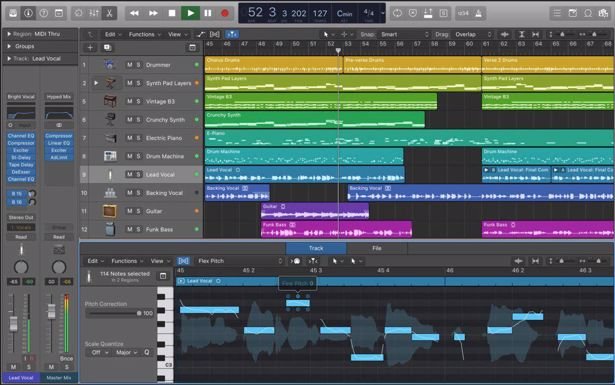
Logic

FL Studio

Ableton Live
